A Quest for Elders
Bringing eldership back into our lives and our communities

Before I share today’s article, a reminder… this week (on Thursday), we’re starting Become a Grounded Guide - our leadership program that’s rooted in kinship and hope. I am SO EXCITED about this program! I think it’s one of the best leadership programs out there and I know that it’s needed in the world. If you know of someone - a young emerging leader, an elder, or someone in between - who can benefit from it, please let them know that they have until Thursday (when we have our first call) to register.
Last year, I started writing a collection of essays on becoming an elder (I turn 60 in two months) which I planned to publish as a book. That project stalled, and I’m not sure a book will come of it anymore, but I like the essays I already wrote, so I thought I’d share some of them here. This first one is about how we’ve largely erased the value of elders in western culture and how important it is that we bring them back into the circle. It’s something I feel passionate about and I am hopeful that we draw together lots of elders and people emerging into their elderhood in our program, Become a Grounded Guide.
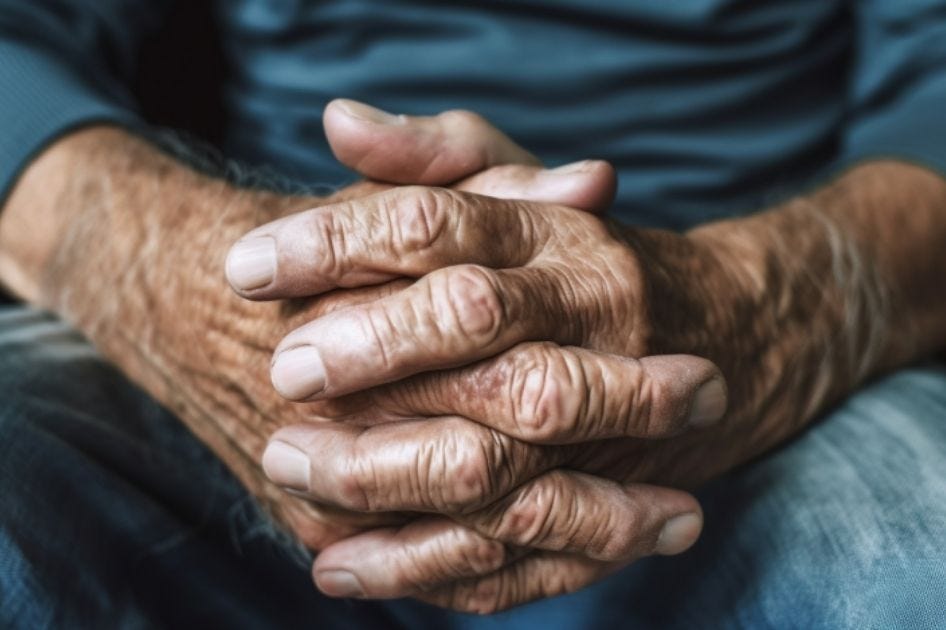
A Quest for Elders
Listen to me read the post…
Are you my elder?
“Are you my mother?” the freshly hatched bird asks repeatedly in the illustrated children’s book by P.D. Eastman. First he asks a kitten, a hen and a dog, and then, becoming increasingly desperate, an airplane. The final object of his inquiry, the “snort”, picks him up with a front-end loader and drops him back in the nest where he finally meets his real mother.
I was that baby bird in my forties when cancer was taking my mother from the nest, but it wasn’t specifically a mother I was looking for. About to face the second death of a parent, knowing there were no more chances to get from them what I had once hoped I would, I left the nest looking for an elder.
“Are you my elder?” I asked of the workshop facilitator. “Are you my elder?” I asked of my aunt. “Are you my elder?” I asked of the seemingly wise grey-haired woman at the women’s gathering, and then the woman at church whose parenting I’d admired.
Only once or twice did I use those actual words, realizing, after the first time, that it was both dumbfounding and insulting to people unprepared for the question. Those I asked directly backed away and swore they were far from ready to be considered elders and didn’t believe they had any wisdom worth sharing.
The message came through clearly: at least in my circles, there was neither readiness for nor acceptance of the kind of eldership I envisioned. There was also little willingness to take on the responsibility they assumed my question implied. That didn’t keep me from looking though, because I knew there was something missing in my life.
I found it hard to articulate what I was looking for. I can see it more clearly now, but back then, nobody was talking about it – not the older people I sought eldership from, nor the peers I tried to engage in the quest. The lack of understanding when I broached the topic often made me wonder whether my quest revealed some lack in me that others had matured out of. It crossed my mind that there was a part of me that had failed to grow up and I was still giving the needs of my inner wounded child too much space, but even after multiple stints of therapy, I still had a thirst that hadn’t been satiated.
The Four Roles of an Elder
What does one look for in an elder, especially when one is about to become parentless? The answer is probably not very different from what the freshly hatched bird was seeking when he wandered away from the nest.
For starters, I was looking for an anchor – someone sturdy enough to help tether me during a time when the living strings tying me to my lineage were being severed. Even after forty, orphanhood can make one feel rudderless and untethered, tossed about in an unpredictable ocean. I wanted at least one person who would feel grounded enough to hold the other end of the line when I was unstable.
Secondly, I was looking for a wisdom keeper and guide – someone who was further along the spiritual path, who would hold a torch for me so that I could find my footing. Since my path had veered away from the evangelical Christianity of my family, I’d often felt like I was searching in the dark with no flashlight, and I longed for a kind hand on my shoulder guiding me toward the light. It wasn’t simply another teacher I was seeking (I could find plenty of those in books and workshops), it was tenderness and companionship mixed with loving guidance.
Thirdly, I was looking for a cheerleader – someone who believed in the work I was doing and would be the loudest voice in the room whenever I did something they were especially proud of. My dad died before I started the work I now do, and my mom was suspicious of it because it didn’t feel Christian enough, so I’d never had that feeling that the younger parts of me still craved – the feeling of rightness and strength that comes when an older person believes in you and points you further down the path than they have managed to travel themselves.
And finally, I was looking for a nest – someone who would offer a safe place for me to rest whenever I’d overextended myself or was flooded with self-doubt. For much of my adult life, I’d been “the capable one”, the person who other people relied on. As a leader and mother, I often had to perform confidence to help others feel secure. That played out in my relationships with my former husband and mom as well – both were plagued with insecurity and turned to me for reassurance. After many years of this, I was longing for someone who expected none of that from me and was comfortable holding space for me when I needed to fall apart.
Cultural dismissal of elders
The clearer I got about what I was seeking, the more I understood the limitations I was up against. It wasn’t just that I was asking the wrong people, that my fumbling attempts were poorly worded, that I was asking out of immaturity, or that people were too insecure or unprepared. The barrier was much bigger than that.
As our culture evolved into what it is now, we largely discarded the idea of eldership and assumed we were doing just fine without it. Fueled by the unchecked growth of capitalism (and its companions - patriarchy, colonialism, and white supremacy), our values shifted, and, increasingly, we rewarded youth, productivity, wealth, and beauty over age, wisdom, contemplativeness, or slowness. Especially in European and North American cultures, individualism replaced collectivism, and we saw it as weakness to admit we needed each other. Inundated with advertising that convinced us that wrinkles, age spots, and stretch marks were shameful and should be eradicated, we poured money into products and services that claimed to be able to help us resist aging, cling to youth, and avoid becoming burdens for the next generation to bear.
The fountain of youth became a more alluring quest than the fountain of wisdom. As a result, many on the precipice of old age became increasingly insecure about their value in society, their intelligence, and the state of their bodies. Rather than seeking wisdom that would help them age into weather-beaten grace, like lighthouses on the cliffs warning ships in stormy weather, they dimmed their lights and watched as they were replaced by newer, shinier, electronically programmed models. Perfectionism was the order of the day, and when their aging bodies and minds didn’t measure up, and they’d retired out of careers that gave them some measure of purpose and authority, they faded into the background.
As I learned, after asking the question a few times, people pushed away eldership because they a.) felt too insecure and imperfect to embrace it, b.) didn’t want to accept that they were old and therefore not as valuable to society, c.) saw it as too much responsibility, and d.) were influenced by the guru-culture of the wellness world to expect younger, more Instagrammable experts to show up instead of them.
When one is largely invisible, it’s hard to find the inner fortitude to believe one still has something worth offering.
When I finally found elders
More by accident than by design, I eventually found what I was looking for. When I stopped looking for elders and simply looked for friends, the four things that I was searching for started to show up. Perhaps, at least in the culture as we know it, it’s normal to have eldership come at us sideways.
First there was Randy. When I met him, back in 2007, I was the Director of Fundraising and Public Engagement at Canadian Foodgrains Bank (an international development agency that does food-related programming in places where there is hunger), and he was a semi-retired volunteer who later became a part-time paid regional representative. I was his boss, but very quickly, we became friends.
At least once a year, Randy would travel to Winnipeg, where I lived, to attend days-long board meetings, and at least once a year, I would travel to Nova Scotia where he lived to travel with him across the province to meet with donors and volunteers. Not long after we met, we found that we were on similar soul-quests. Whenever one of us would travel to the other’s province, we would add a few days to the trip to enjoy each other’s company.
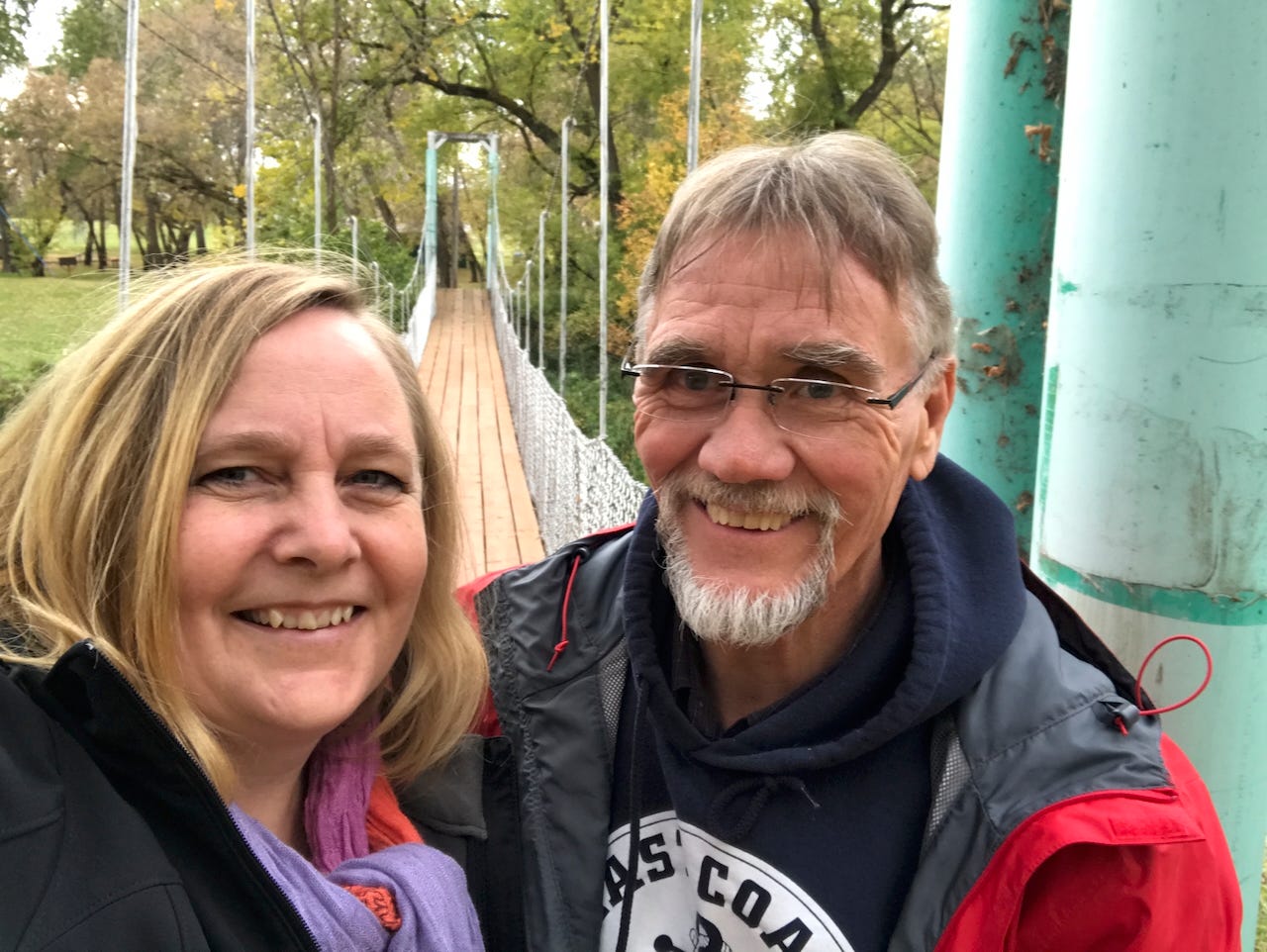
Randy had spent his career as a United Church minister (a much more progressive branch of Christianity than I’d grown up in), and he’d also studied Jungian psychology in his PhD program. Early in our friendship, when I was still an active member of a church but was disillusioned with the patriarchy embedded in my experience of Christianity, Randy and I had long conversations that expanded my thinking and allowed me to let go of certain beliefs without abandoning my spirituality altogether. He loaned me books on the feminine divine and offered reinterpretations of the most troubling Biblical passages.
Randy and I both loved long meandering drives in the countryside, and we spent many hours doing so in both Nova Scotia and Manitoba. On those drives, the conversations tugged at many of the threads of our individual but overlapping questions, longings and heartaches. A few years into our friendship, we started to dream about one day hosting a retreat together.
Randy delighted in me. That’s the simplest way I can describe what I felt whenever I was in his presence. He loved how my mind worked, he loved my curiosity, and he loved the synapses of connection he could see sparking in my eyes when we were deep in conversation. I will never forget the joy I’d see on his face when I’d greet him at the airport or walk into his home. I could lean into his love, confident that he would always be my cheerleader, anchor, guide and nest. (Needless to say, it was mutual delight.)
Once, when Randy phoned me, I told him I was perched in a tree in my backyard writing. In my home at the time, there was a large maple tree with a spot between two massive limbs that fit an old couch cushion perfectly and I could curl up with my laptop. (In retrospect, I recognize how much that choice reflects my longing for a nest.) He laughed and said, “You’re the only friend I know that I can phone and not be surprised to find perched in a tree.” That was the nature of our friendship – we both loved each other’s quirkiness and inquisitive nature because we saw so much of ourselves in each other.
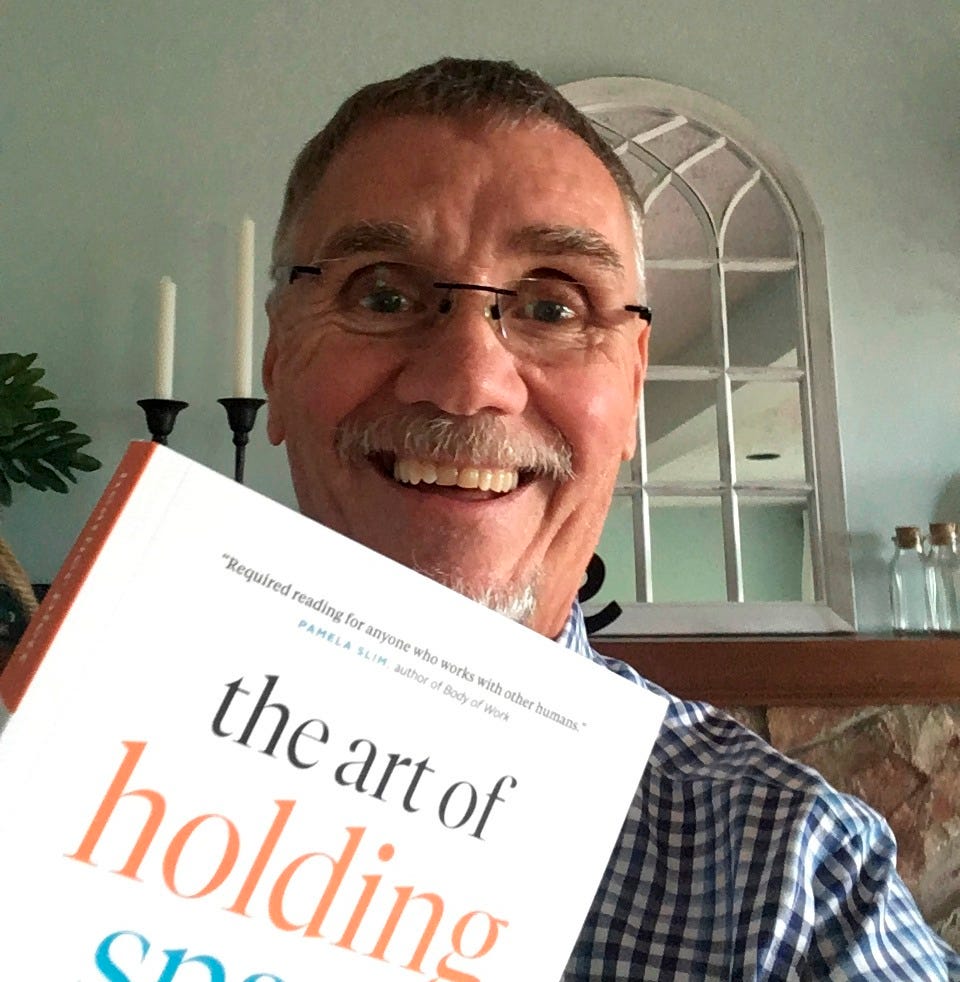
I think I only ever saw Randy post on social media once. It was the day my first book came out. He posted a photo of himself with the signed copy I’d sent him – he wanted to be the first to brag about me.
(Sadly, Randy died three and a half years ago.)
****
A few years after meeting Randy, I met Lorraine and TuBears. We met at the annual gathering of Gather the Women, an international collective that supports women’s circles. We first started chatting because Lorraine had taken one of my early online courses, but it didn’t take long before our conversations deepened far beyond that. We quickly found there was joy to be had in each other’s company.
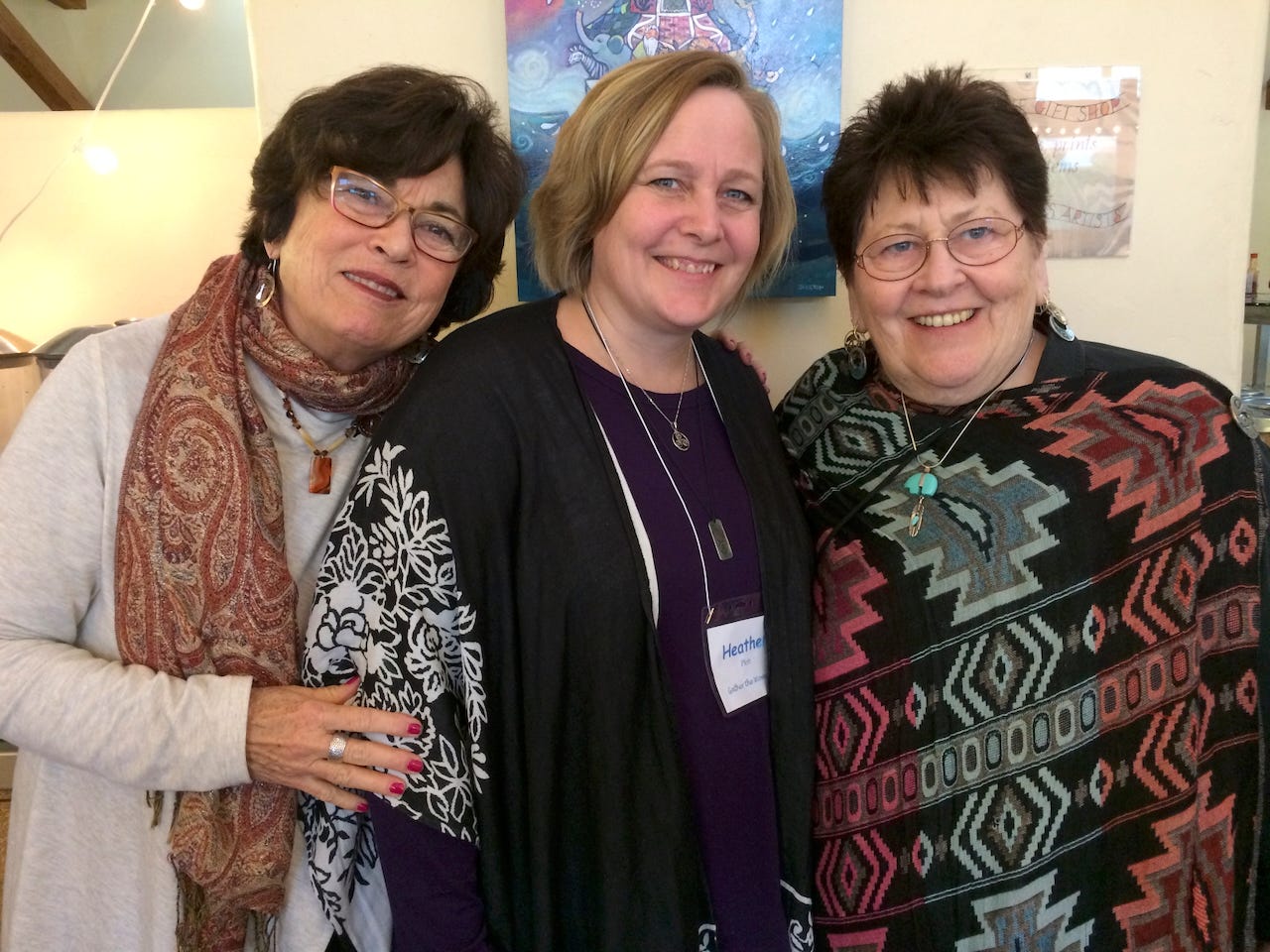
A couple since 2002, Lorraine and TuBears share a special kind of love that I first witnessed during an evening ceremony, sitting under the trees by the lake. TuBears is an elder and pipe carrier of the Choctaw nation, a responsibility she bears with both gravitas and humour. To be in ceremony with her is to receive an immeasurable gift (and, more than likely, a few good laughs).
What struck me in that first ceremony, and has stayed with me ever since, was the beautiful partnership between the two women. As the ceremonial host, TuBears draws most people’s attention, but her role would be incomplete without the contribution of her loving partner. While TuBears begins, first by calling in the four directions, Lorraine tenderly unwraps the pipe from its leather bag. When TuBears takes the pipe, Lorraine prepares the tobacco, then lights the sage with which she smudges the pipe, TuBears, and anyone else who wants it. TuBears shares stories, visions, and bits of wisdom, while Lorraine’s hands never stop anticipating TuBears’ next need. Once the pipe is assembled and packed with tobacco, Lorraine holds out the flame to light it. If the tobacco ever goes out during the ceremony, Lorraine is always ready with the flame to relight it.
It’s a beautiful thing to behold – the way their love lives in their hands, passing the pipe and sage between them; the way it lives in their hearts, each serving as a mirror to let the full light of the other be seen; the way it lives in their eyes, the tender glances, the smile lines, the adoration.
What happens in ceremony is what lives in their day-to-day love. Not only do they shine in each other’s presence, but each is intentional about reflecting the light of the other into the world. Never have I heard an unkind word spoken by one about or toward the other – only admiration for the other’s gifts and deep gratitude for the other’s presence. And once they embrace you as a friend or adopted family member, as they did with me (and my daughter), they extend the same respect to you.
That first gathering happened during the time my own marriage was ending – a marriage in which my light was dulled more often than it was reflected into the world. I’d become cynical about romantic love at that time, not having seen many long-term relationships that made both people better for it, but their love gave me hope. It still does.
I saw Lorraine and TuBears once a year after that, at other annual gatherings in other places, and each time, they enfolded me into their love, and I felt like I’d come home. Then, in May of 2018, I accepted their invitation to spend time in their home in Reno. I was working on my first book at that time, and they offered up the small guest cottage in their backyard (which they call the “casita”) as my writing hideaway while I completed the final chapters.
In the final chapter of The Art of Holding Space, I wrote about that special time. For long days, I would write in the casita, surrounded by sacred ceremonial objects they’d collected over the years, often curled up in an armchair covered in TuBears’ buffalo rug. At least once or twice a day, Lorraine would show up at the door with a smoothie, tea, or salad, and in the evenings, we’d sit around the dinner table while TuBears would share stories of how she’d held space in sweat lodges, on vision quests, or at Sundance. Sometimes I’d read a few of the paragraphs I’d worked on that day and they would grin as though I were a grade schooler coming home with an A+ on her report card. “Holding space,” TuBears told me, when I was nearing the end of the writing, “is an ancient practice that returns to us whenever we need it most. You are being tasked with helping its rebirth into the world.”
Never have I been so clear about the value elders can play in a person’s life than I was at that table, in their presence. The book was better because they journeyed with me toward its completion.
The strength of their partnership meant that they played the roles of anchors, guides, nest, and cheerleaders as a collective rather than as individuals, each of them bringing their gifts into what they offered me. The eldership, in this case, came from the “we space” between them more than it came from either one separately.
When I was with them, I felt like that little bird, plopped back into the nest by the “snort”, finding the comfort, support and belonging I’d been searching for. As a nest will do for a baby bird, it not only provided a safe haven, but also a secure base from which to practice flying (language that emerges out of attachment theory). Later, during an online launch of the book, I invited TuBears to offer a blessing for the work, because she and Lorraine were integral in its birthing.
(Lorraine & TuBears are now aging and in need of support. If you can afford it, please consider donating to their care.)
Are you an elder? Emerging into one? Or seeking them in your own life? Consider joining us in Become a Grounded Guide.